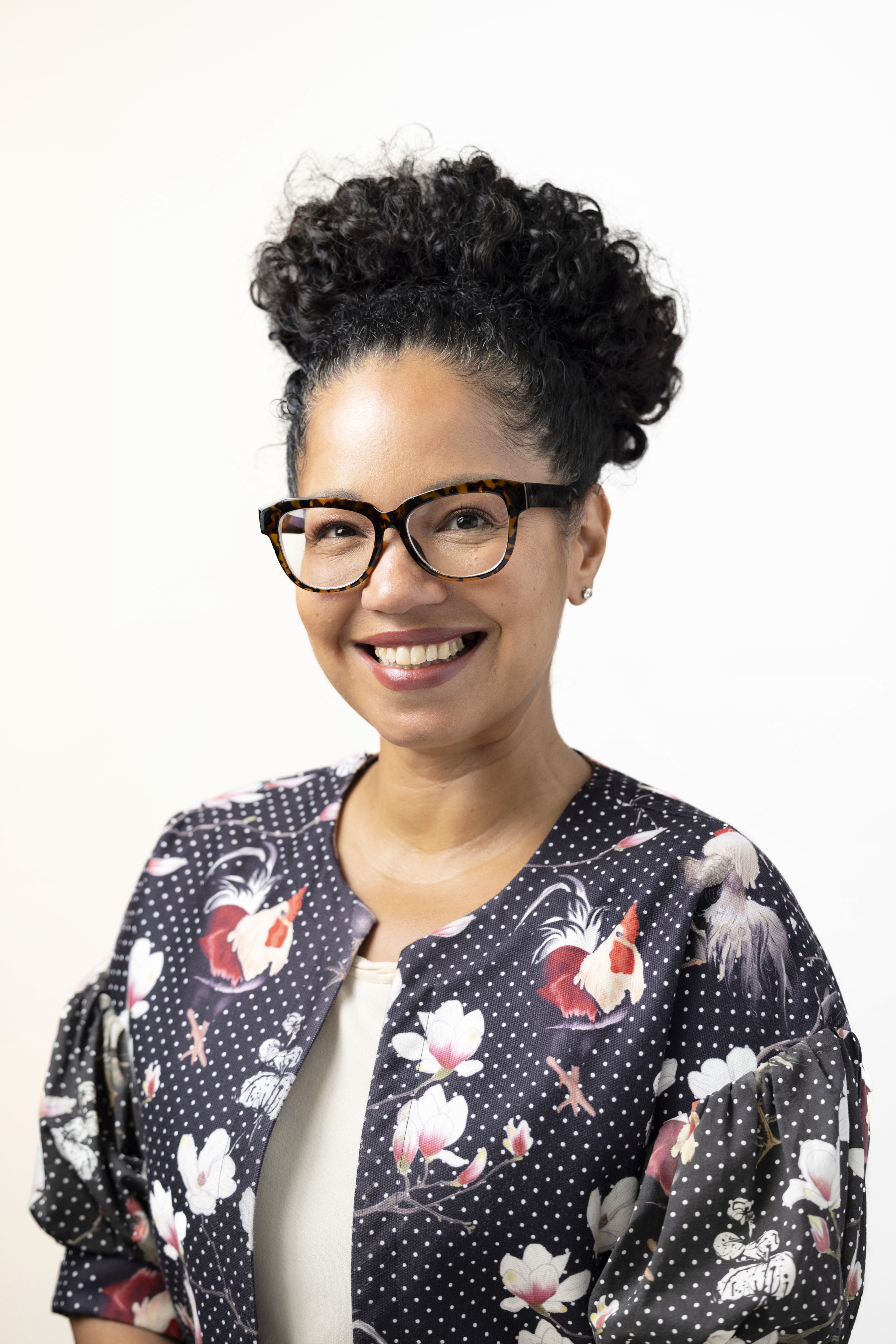
Dr. Yadira Perez
Cultural anthropologist and global public health researcher. Twenty years of work on identity, belonging and equitable health, from the Dominican Republic to Nepal to Naarm (Melbourne).
Selected research
Each tile is one piece of work in plain language. Click any tile for the abstract and the link. Some earlier publications appear under the name Yadira Perez Hazel.
Blanqueamiento in Paradise
My doctoral research: a decade studying how the Dominican Republic used immigration and ideas of whiteness to build its national identity.
Read more +
Ethnographic and archival research on Japanese immigration to the Dominican Republic and the state project of blanqueamiento, whitening the nation through settlement, land and law. The foundation for all the identity work that followed.
PhD dissertation, Department of Anthropology, University of Virginia, 2009.
Read the dissertation
Sensing Difference
How race and belonging in the Dominican Republic are perceived through the senses, not just documents.
Read more +
Based on long-term fieldwork, this article shows how whiteness, national identity and belonging are read through everyday sensory experience: how people look, sound and are felt to belong.
Transforming Anthropology 22(2), 2014, 63–76.
Read the article
¿Ajeno Siempre Será? (Foreigners Forever?)
How a 2013 court ruling stripped citizenship from generations of Dominicans of Haitian descent, and why Japanese immigrants were treated differently.
Read more +
Examines the Dominican constitutional court's 2013 decision, which retroactively removed citizenship from people born to parents deemed "in transit" since 1929, most of them of Haitian descent. Drawing on more than fifteen years of research with Japanese immigrant communities, it shows how the state applies "foreignness" selectively and reads the ruling as a public spectacle that consolidates power.
Memorias: Revista Digital de Historia y Arqueología desde el Caribe Colombiano 12(28), 2016, 136–166.
La blancura en el paraíso
The whiteness research, written in Spanish for Latin American readers.
Read more +
A Spanish-language essay on whiteness and national identity in the Caribbean.
Revista Asia América Latina 3(5), 2018.
Bla(c)k Lives Matter in Australia
On how Blackness is claimed and contested in Australia, where a single letter carries a whole politics.
Read more +
Written after arriving in Naarm, this essay for Transition magazine explores how First Nations and diaspora communities in Australia claim, spell and contest Blackness, and what solidarity looks like between them.
Transition 126, 2018, 59–67.
Read the essay
Locating Feminism in Asian Diasporas
Co-edited introduction to a special journal issue gathering feminist voices across Asian diasporas.
Read more +
With Lili Shi, this introduction frames a special issue of WSQ on how feminism is located, translated and lived across Asian diasporic communities.
WSQ: Women's Studies Quarterly 47(1&2), 2019, 13–28. With Lili Shi.
Read the introduction
Finding an Academic Home
Three Latina professors use their own stories to argue for structured mentoring in universities.
Read more +
Drawing on our own narratives as Latina junior faculty in New York, this article shows that universities recruiting diverse faculty rarely support them to stay, and calls for structured, culturally aware mentoring as key to retention and success. Written with Maria Susana Pagan and Kaliris Y. Salas-Ramirez.
Policy Futures in Education 20(7), 2022, 812–827.
Read the article
Storycircles
The group-storytelling research that Moss Move grew from.
Read more +
Research on gathered storytelling and witnessing, the scholarly seed of the Moss Move practice. Full citation coming soon.
Equitable Eye Health for Rural Nepalese Women
Designing a research trial with Nepalese partners to get more rural women into eye care, learning and adjusting as it ran.
Read more +
Documents the design of a pragmatic trial in rural Nepal to increase women's uptake of eye health services, and the continuous knowledge translation behind it: formative research, collaborative redesign with Tilganga Institute of Ophthalmology, and an ongoing advisory group guiding the work in real time. Lead author.
International Journal of Environmental Research and Public Health 17(1), 2020, 345.
Read the article
What Women Want from Eye Clinics in Nepal
What 308 women said about their experience of eye care, and what would bring them back.
Read more +
Exit interviews with 308 women across eight eye facilities in Nepal. Satisfaction was high, and what mattered most was a thorough examination, kind staff and a clean facility, while most women still paid for care out of pocket.
"Female Clients Satisfaction towards Primary and Secondary Eye Health Facilities and Cost of Eye Care in Nepal." Nepal Journal of Ophthalmology 13(26), 2021, 186–189.
Read the article
Quality of Refractive Error Care (Q.REC)
Sending trained "mystery patients" into optical shops in three countries to measure the real quality of care.
Read more +
A study protocol for measuring real-world quality of refractive error care in Cambodia, Malaysia and Pakistan using unannounced standardised patients, who purchase glasses and record the care they receive, because the truest measure of a health system is what happens when nobody knows a researcher is in the room.
BMJ Open 12, 2022, e057594.
Read the protocol
What Actually Improves Eye Care Access
A review of two decades of evidence on closing the eye care gap for women, rural residents and older people.
Read more +
A scoping review of 39 studies from 16 low- and middle-income countries. Outreach services, teleophthalmology and health financing showed the most promise for reaching women and rural residents, while major gaps remain for older people.
Frontiers in Public Health 13, 2025, 1578848.
Read the reviewGatherings & conversations
Where the research and expertise become practice.
Under the Same Moon
A women's moonlit story walk along the Birrarung, from Abbotsford Convent to Dight Falls.
Read more +
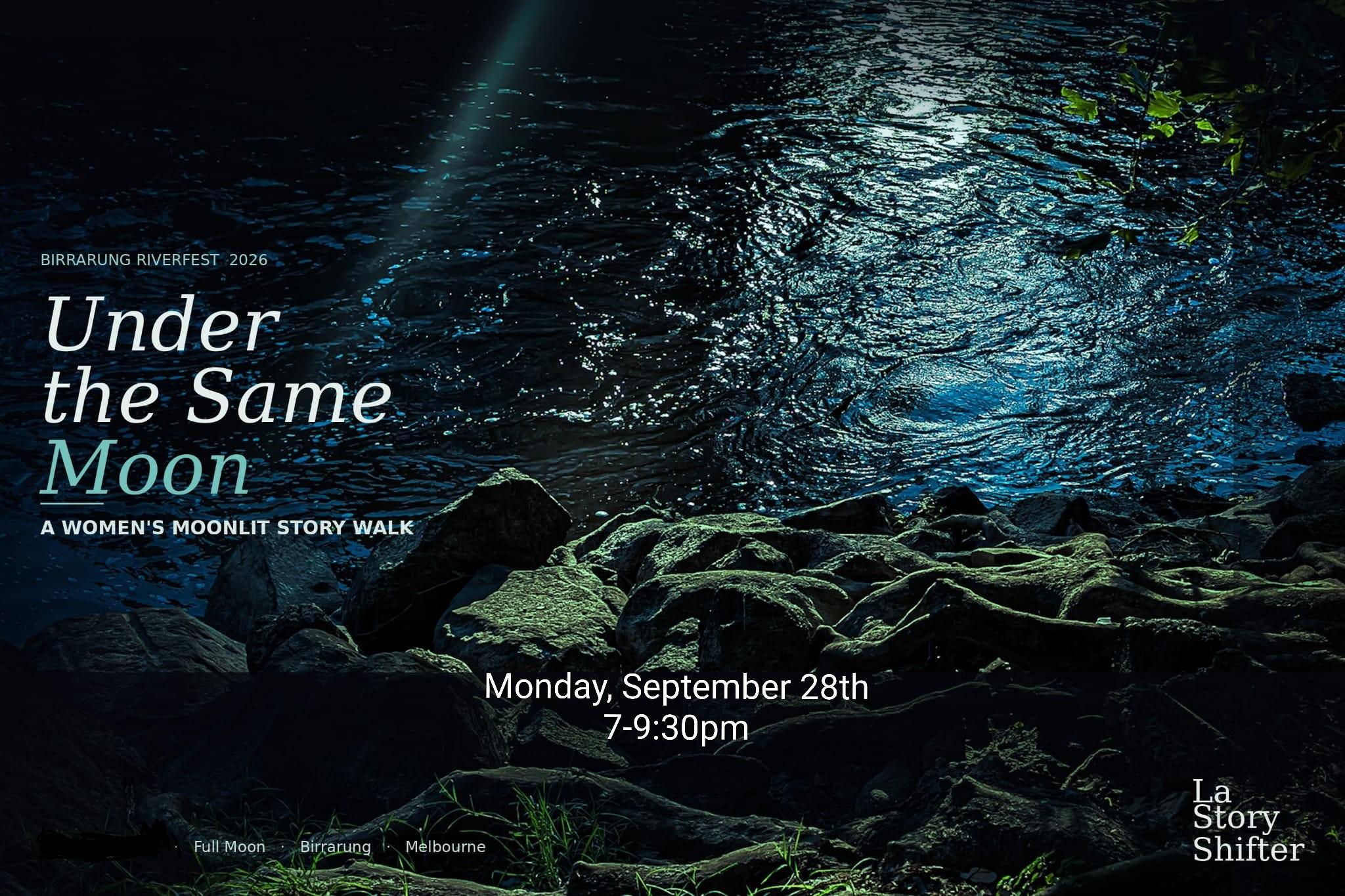
Held under the full moon as part of the 2026 Birrarung Riverfest with the Yarra Riverkeeper Association. A guided walk where women share and witness stories of place and belonging beside the river.
Learn more
Umoja
Nine years growing a diaspora community network across Melbourne, built on chosen family across generations.
Read more +
Umoja gathers Melbourne's diaspora communities for connection that outlasts any single event: shared meals, intergenerational friendship and the slow work of belonging to each other.
Puerto Ricans Down Under
In conversation with Erika Cramer on identity, diaspora and finding home away from home.
Read more +
A long conversation on The Confidence Chronicles between two Boricuas who found each other in a city with almost none of their people: growing up between the Bronx and the island, raising children with cultural pride far from home, and building community from scratch.
Listen to the episodeThe writing
Short observational pieces come free to every reader. The long essays and speeches, like "The Picture I Carried Back," live a little further in.
Read La Story ShifterWork with me
Moss Move workshops open in small cohorts. If a story has moved in you, the door is open.
Step forward